

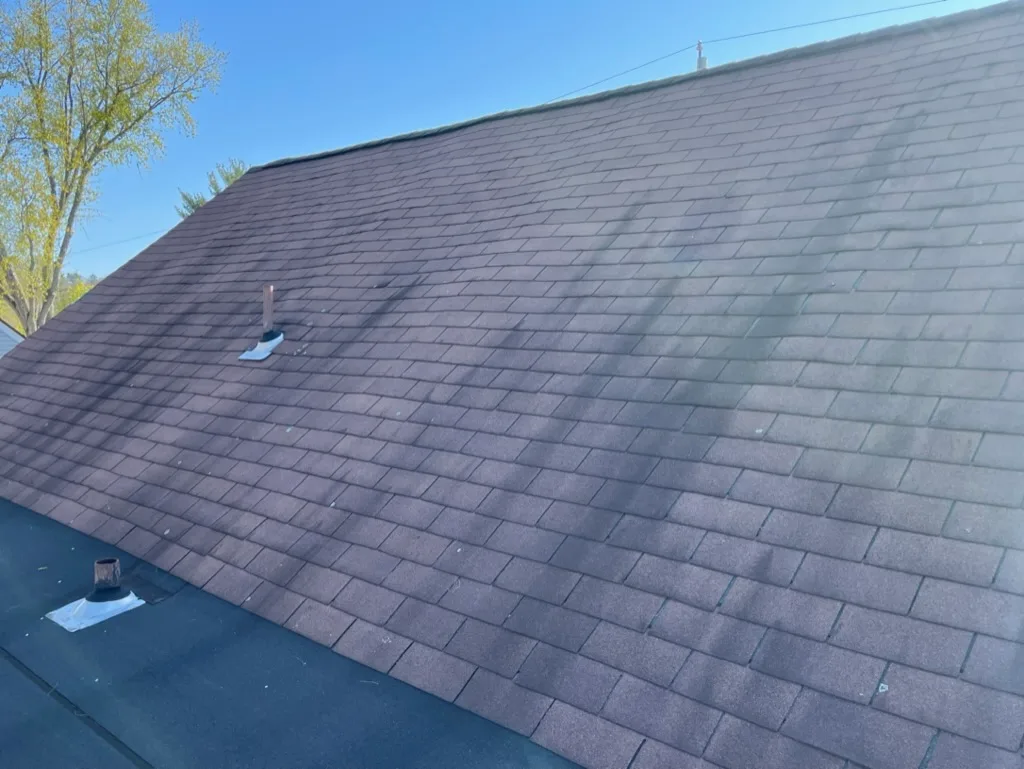
If the north side of your roof has dark stripes running from the ridge toward the gutter, you are looking at the most common roof complaint in Dutchess County. It is not dirt. It is not soot from the chimney. And it is almost never a sign that the shingles are failing. It is algae, and it comes off.
What The Black Streaks Actually Are
The streaks are a colony of Gloeocapsa magma, a blue-green algae that arrives on the wind and takes hold wherever a roof stays damp longest. It feeds on the crushed limestone that manufacturers mix into asphalt shingles as filler, which is why roofs built in the last few decades streak more than the old ones did. Each cell grows a dark sheath to protect itself from the sun, and millions of those sheaths side by side are the black you can see from the street. The streaks run downhill because rain carries the colony toward the gutter, and they are darkest on the north and shaded slopes because that is where the roof stays wet.
Why It Shows Up On Hudson Valley Roofs
Humid summers, tree cover and shade. A roof under oaks and maples in Poughkeepsie, LaGrangeville or Rhinebeck holds moisture for hours after every rain and every heavy dew, and the algae only needs a few of those hours a day. Most asphalt roofs in the area show the first streaks somewhere between year five and year ten, and once one house on the street has it, the wind carries it to the rest. The shaded side of a dormer or chimney, the slope under a satellite dish and the run below a ridge vent are usually where it starts.
Is It Damaging The Roof, Or Just Ugly?
Both. The algae is eating the shingle. As it consumes the limestone filler, the granules that protect the asphalt loosen and wash into the gutters, and the mat of growth holds water against the shingle instead of letting it dry. A streaked roof also runs hotter, because dark surfaces absorb more sun, which shortens shingle life and pushes attic temperatures up in July. Left alone, the algae becomes the foothold for moss and lichen, which are harder to remove and do real damage by lifting the shingle edges. Shingle manufacturers sell algae-resistant lines with copper granules for a reason.
The other cost is the one you see at resale. Home inspectors note it, buyers photograph it, and a roof that looks tired takes money off an offer whether or not it has a decade of life left in it.
Do Black Streaks Mean You Need A New Roof?
Almost never. A roofer who quotes a replacement because of streaks is quoting the appearance, not the condition. The question that matters is whether the shingles are brittle, curling or bare of granules, and a clean roof answers it, because once the growth is gone you can see what you have. Most roofs we are called to look at because of streaks are structurally sound and need a cleaning, not a $12,000 to $30,000 replacement. Have it cleaned first. If it still looks tired when it is clean, then talk to a roofer.
What Not To Do
Pressure washing. High pressure strips the granules off the shingle, drives water under the laps and can void the manufacturer warranty; the Asphalt Roofing Manufacturers Association warns against it directly. It also does not kill the algae, so the streaks are back within a season on a roof that now has less life in it.
Bleach from a garden sprayer. Uncontrolled runoff burns the lawn and the shrubs under the gutters, a hardware-store mix is rarely strong enough to kill the colony at the root, and a wet roof is no place to stand with a sprayer.
Zinc or copper strips. They slow new growth in a narrow band below the strip and do nothing for the streaks that are already there.
Waiting. The colony spreads every wet season, and the moss and lichen that follow it cost more to remove than the algae did.
How A Soft Wash Removes Them
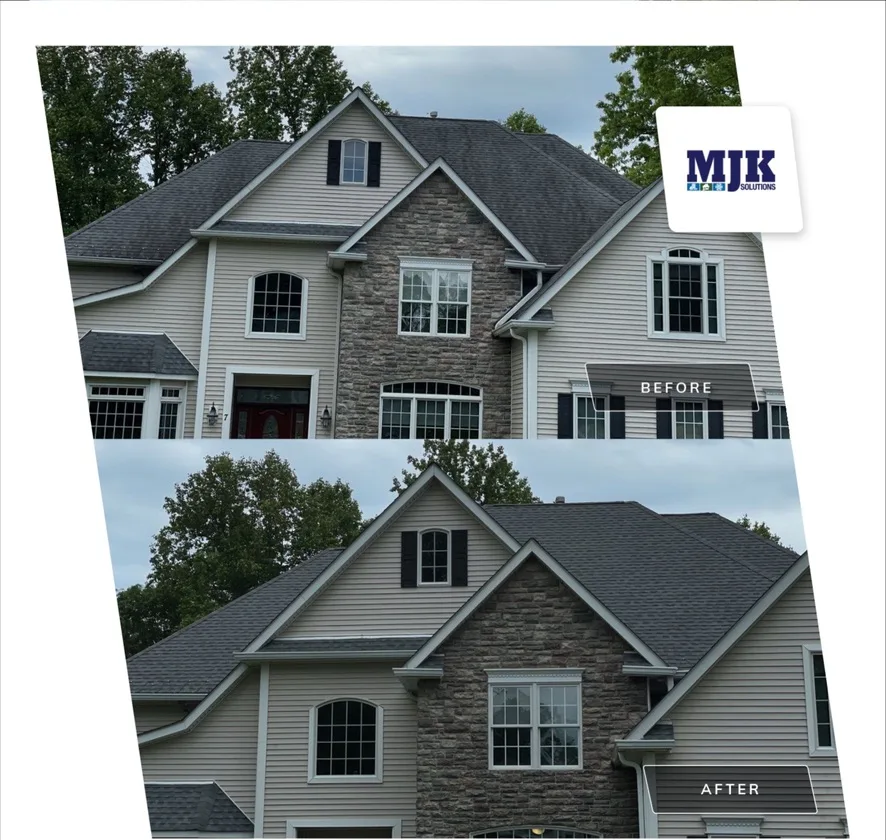
A roof soft wash applies a cleaning solution at low pressure, about the force of a garden hose, that kills the algae at the root and lets the rain finish the job. The streaks start fading the day of the wash and are usually gone within one to three weeks as the dead algae weathers off; moss and lichen die on contact and release over the weeks after. There is no pressure on the shingles, the landscaping is protected, and the roof comes back to its original color instead of a damaged version of it. Every full-roof wash we do is covered by our One-Year Roof Wash Warranty: if algae or moss has not cleared within a year, we re-treat at no charge. Our soft washing vs. pressure washing page covers why the same rule applies to siding.
What It Costs And How Long It Lasts
A full roof soft wash in Dutchess County starts at $995 for a ranch or cape, and a typical two-story colonial runs $1,195 to $1,800. Those are starting prices; every roof is quoted individually and in writing before we arrive. Our roof cleaning cost guide breaks the number down by roof size and explains what moves it. The result holds three to five years on most roofs, longer on a sunny lot, and the maintenance plan on our packages and plans page takes 10% off the next visit and locks the price for three years. While the crew is there, gutter cleaning and a house wash come in at a package rate, because the algae on the roof is the same organism that is on the siding below it. If the gutters are due, here is when to clean them.
Black Streaks On Your Roof? Here Is The Next Step
Send us your address and a photo from the driveway and you will have a firm number, usually the same day. Request a quote or call (845) 709-9443.
Black Streaks On Roof FAQ
No. They are Gloeocapsa magma, an airborne algae that feeds on the limestone filler in asphalt shingles. The black you see is the protective coating the algae grows against the sun. Mold on a shingle roof is rare, and either way the fix is the same soft wash.
No. Streaks are surface growth, not a structural problem. Left for years they shorten shingle life, but a streaked roof is not a leaking roof. Have it cleaned, then judge the shingles on what you can actually see.
You should not. High pressure strips the protective granules off the shingles, drives water under the laps and can void the manufacturer warranty, and it does not kill the algae, so the streaks are back within a season. A low-pressure soft wash kills the growth and leaves the shingles alone.
Eventually, because the spores arrive on the wind. On most Hudson Valley roofs a soft wash holds three to five years, longer on a sunny lot. A maintenance plan keeps the roof ahead of the regrowth at a lower price than a fresh cleaning.
Same treatment, slower result. Moss and lichen die on contact and release over the following weeks with rain, so a heavily mossed roof looks better every week for a month. Heavy moss adds to the price because it takes more solution and more time.
A full roof soft wash in Dutchess County starts at $995 for a ranch or cape, and a typical two-story colonial runs $1,195 to $1,800. Those are starting prices and every roof is quoted individually. Our roof cleaning cost guide breaks the number down by roof size.


