
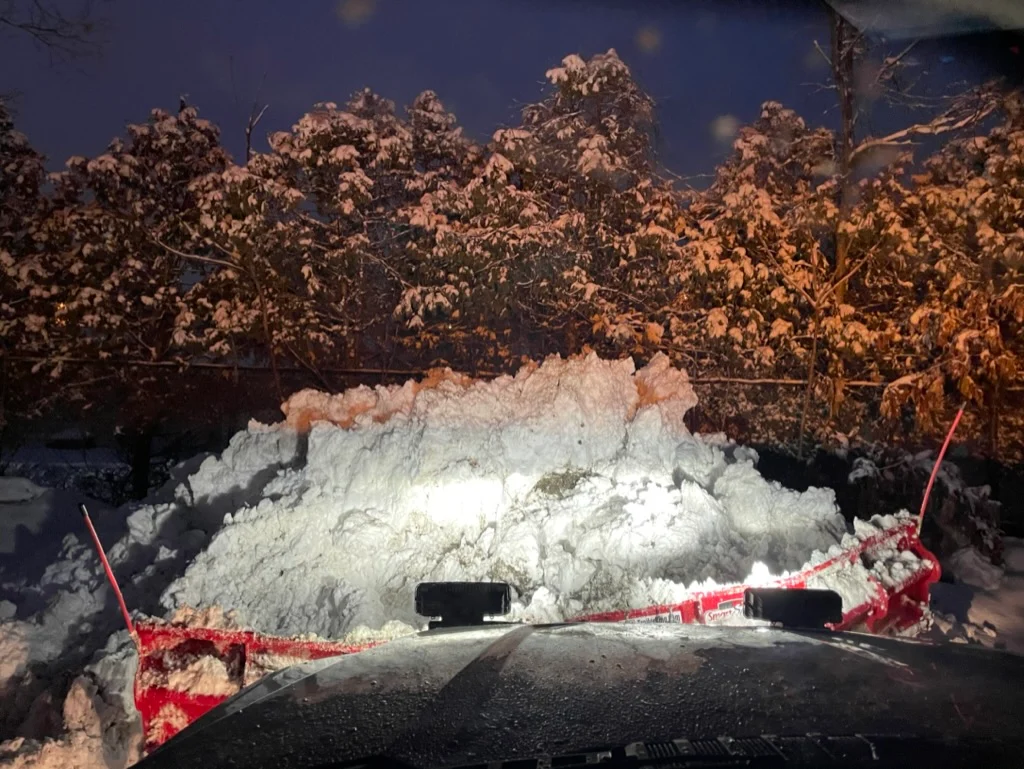
Every commercial snow contract in Poughkeepsie and the Hudson Valley answers one question: who carries the risk of the winter. A fixed seasonal price puts a heavy winter on the contractor. A per-event rate puts it on you. Neither is wrong, but property managers who sign the wrong one for their site spend February arguing about invoices instead of running the building. Here is how the three contract types actually work, what a scope has to say to be worth signing, and why the properties that sign in October are the ones that are open at 7 am in January.
The Three Ways A Snow Contract Is Written
Full season, fixed price. One number for the winter, from November 1 through April 15, billed as a deposit up front and monthly installments through the season. It does not move if it snows every week, and it does not shrink if it barely snows at all. This is the contract for a property that has to be open every day regardless: medical and professional offices, retail with morning traffic, restaurants, apartment and condominium communities. The budget line is set in October and nobody at the ownership level hears about snow again until spring.
Seasonal base plus overage. A fixed price that includes a stated number of plow events, with a defined rate for each event beyond that. You carry the risk of a very heavy winter; the contractor carries the risk of a normal one. It suits a property with some flexibility on timing, or an owner who wants a predictable base without paying full-season money in a year that might be mild.
Per event. Each storm is billed at a rate set by plow depth, with de-icing applications billed as they happen. Cheapest in a light winter, most expensive in a hard one, and the invoice is a different number every month. It works for properties that can tolerate that, and it is the wrong choice for anyone whose board or owner needs a fixed number.
The honest way to choose: if a closed lot costs you money or exposes you to a claim, buy the season. If it merely inconveniences you, buy events.
What The Scope Has To Say
The price is the least important line in a snow contract. The scope is what you are actually buying, and a scope that fits on one line is a scope that will be argued about. It should name every surface and the order it gets cleared: the lot, the drive lanes and entrances, the fire lanes, the loading dock and the dumpster enclosure. Sidewalks and building walkways are not part of our snow service, so a good contract says that plainly and leaves nothing to assumption. It should state the accumulation that triggers service automatically, commonly two inches on a commercial lot, and whether the crew runs through a long storm or clears once at the end. It should say where the piles go, and that they will be pushed back or relocated before you lose a row of spaces in February. And it should say who to call, by name, and that the person who priced the property is the person who runs it.
Ice Is The Claim. Snow Is Just The Work.
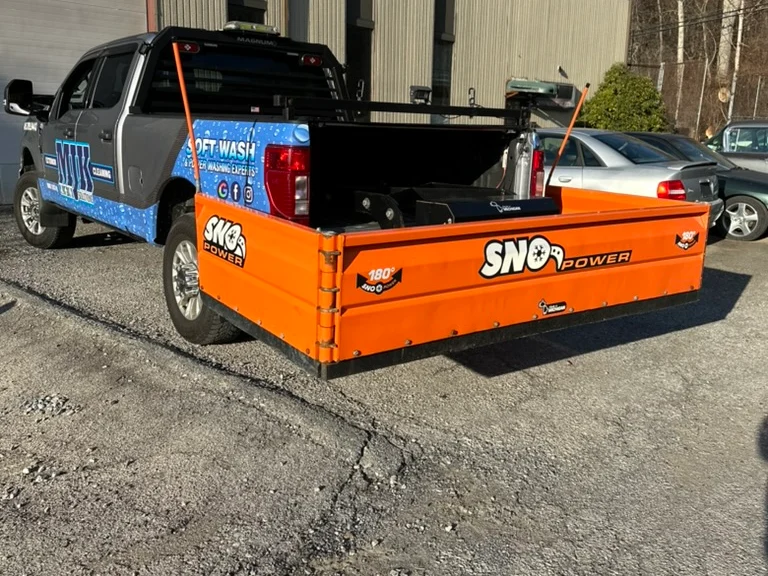
Nobody slips on eight inches of snow. They slip on the quarter inch of ice that formed at 5 am on a lot that looked clear at 4 pm the day before. The Hudson Valley freeze-thaw cycle, warm enough to melt at noon and hard frozen by morning, is what generates slip-and-fall claims, and it is the part of the contract most managers read least carefully. Ask what product is used and how applications are counted. We treat with Ice B’Gone treated salt, applied by truck-mounted spreader, because it keeps working at lower temperatures than plain rock salt and holds to the surface instead of bouncing into the landscaping, which means fewer applications and less damage to the asphalt over a season. De-icing is written into the contract one of two ways: a set number of applications folded into the seasonal price, or a per-application rate you approve as conditions call for it. Either works. A contract that does not mention it is where the surprise invoices come from.
The Paperwork Your Carrier Will Ask For
A certificate of insurance naming your entity as additional insured, delivered before the first storm, not after you ask twice in December. A W-9 and whatever vendor onboarding your owner requires. A written scope you can hand to your insurer or your board. This is the difference between a commercial contractor and a landscaper with a plow, and it is worth asking for before you compare prices, because the vendor who cannot produce it in October will not produce it in February either.
Why Contract Properties Get Plowed First
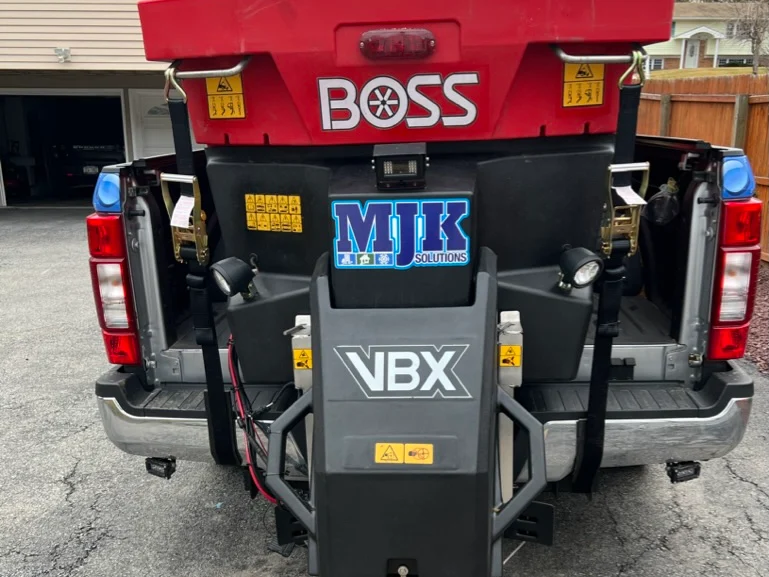
The plow route is set before the season, in an order that starts with the properties that must be open earliest and works outward. Contract accounts are in that route. Phone calls during a storm are not. When eight inches falls overnight, the crew already knows where your fire lane is, where the piles go and which door your staff uses, because the property was walked in October. That is the practical reason to sign early, and it applies whether your property is an office on Route 9 in Poughkeepsie, a plaza in Hyde Park or a community in Wappingers Falls. Our commercial route runs through those three towns first, in an order set before the first flake.
More Than One Site
Multiple properties go under one contract, one scope and one invoice, with a plow order set before the season. It is also how the price comes down: a route of sites near each other costs less to run than the same sites booked separately. HOA and condominium communities with several buildings, roads and a clubhouse are priced the same way, as one property with one scope.
Get Your Winter Priced Before The First Storm
Send us the property address in Poughkeepsie, Hyde Park, Wappingers Falls or the surrounding towns and what needs to be cleared. We walk the site, put the scope in writing with the contract type you want, and send a certificate of insurance with the proposal. Seasonal contracts are set in the fall and the plow order is set with them. Request a snow bid or call (845) 709-9443.
Commercial Snow Plowing FAQ
A seasonal contract is one fixed price for the whole winter, whatever it brings, billed as a deposit and monthly installments. A per-event contract bills each storm at a rate set by plow depth, so a light winter costs less and a heavy one costs more. A seasonal-base contract sits between them: a set number of events included in a fixed price, with a stated rate for anything beyond.
By the middle of October. Contract properties are walked, scoped and placed in the plow route before the season, and the route is set with them. A property that calls during the first storm gets whatever capacity is left.
The exact surfaces and the order they are cleared, the accumulation that triggers service, whether the crew runs during the storm or after it, how ice is treated and how applications are counted, where piles go, the term dates, the billing schedule, and a certificate of insurance naming your entity as additional insured.
Only if the contract says so. Some contracts fold a set number of applications into the seasonal price; others bill per application as conditions call for it. Either is fine. What is not fine is a contract that is silent on it, because that is where the surprise invoices come from.
No. Our commercial snow service covers parking lots, drive lanes and lot entrances, plowed and treated with de-icer. Sidewalks and building walkways are not part of our scope, and the contract says so in writing.
Yes, and it is how the price comes down. Sites near each other go under one contract, one scope and one invoice, with a plow order set before the season. A route of neighboring properties costs less to run than the same properties booked one at a time.


