
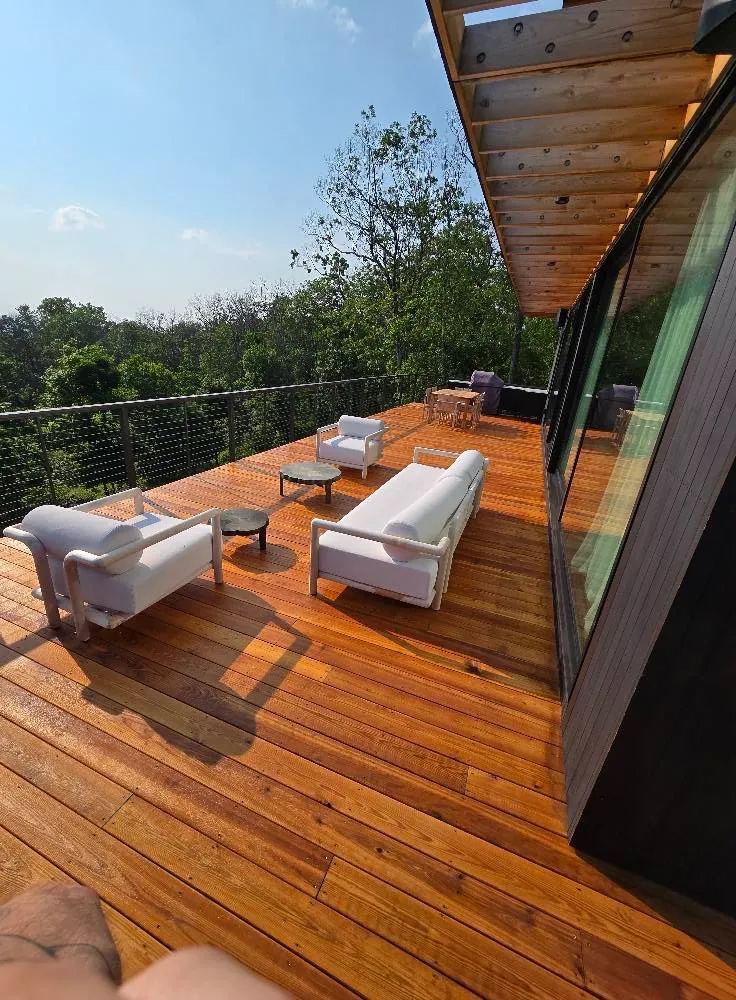
The stain went on two summers ago and it is already peeling off the boards in sheets. The can said five years. The stain is not the problem, and neither is the wood. The problem is what was under the stain when it went on. Almost every deck in the Hudson Valley that fails early was stained over gray, dead wood fibers, a film of mildew, a season of pollen or the remains of the last finish, and stain does not bond to any of those. It bonds to clean wood. Here is what is on a weathered deck, why the rented pressure washer makes it worse, and what a proper deck cleaning leaves behind for the stain to hold.
What Is Actually On A Gray Deck
Four things, in layers. The gray itself is the top layer of wood fibers, killed by ultraviolet light and no longer attached to anything. Under and on top of it is mildew, which lives in the shade and on the north-facing boards and looks like dirt until you wash it and it comes back. Mixed into both is the pollen, road dust and tree debris that a deck under oaks in Hopewell Junction or Fishkill collects every spring. And on a deck that was stained before, there is whatever is left of that finish: sound in the sheltered spots, chalking and lifting where the sun and the snow sat on it. Stain applied over that stack bonds to the stack, not the deck, and the stack lets go.
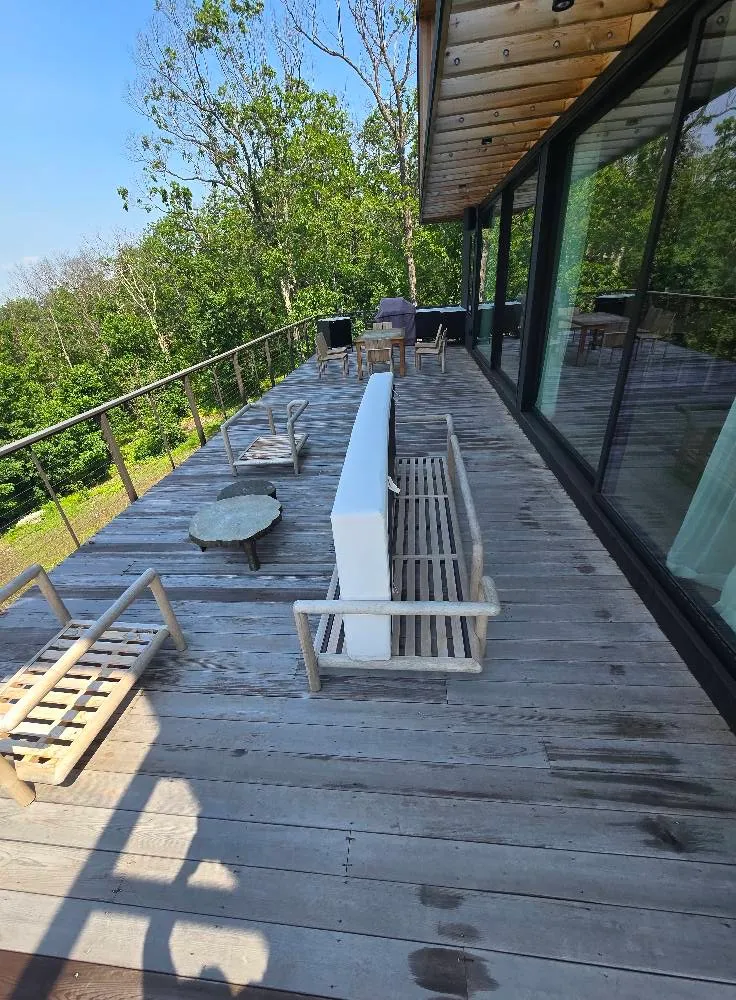
Why Stain Peels: It Was Applied Over Something
A finish fails from underneath. When the dead gray fibers finally release, they take the stain with them. When the mildew keeps growing under the film, it lifts it. When the boards were still holding water from a wash the day before, the moisture pushes out through the finish as the sun hits it. And when new stain goes over old finish that is half-bonded, the new coat is only as attached as the old one. The manufacturer’s five-year claim assumes clean, dry, bare wood, and it is not wrong; it is just describing a deck most people never actually stain.
The Rented Pressure Washer Is The Fast Way To Ruin It
High pressure on soft wood tears it. The surface furrows as the soft summer growth between the grain lines blows out, the grain raises and stays fuzzy, and every pass leaves a lighter wand mark that shows through a semi-transparent stain like a stripe. It also drives water deep into the boards, which is why a pressure-washed deck stained the same weekend peels first. The wood looks clean for a day and rough for years. A soft wash does the opposite: a cleaning solution at low pressure kills the mildew and algae, loosens the gray fibers and the pollen, and rinses them off without cutting into the wood.
What A Proper Deck Wash Leaves Behind
Bare, bright, even wood. The gray is gone, the mildew is dead rather than moved, the loose finish is lifted, and the color is uniform from the stairs to the railing so the stain goes on the same shade everywhere. Any old finish that is still sound and bonded is a different job, and we tell you before we start whether the deck will take stain evenly or needs a stripper first. What you should never get is a deck that is clean in the middle and gray at the railing posts, or a deck that looks great wet and blotchy dry.

Composite And PVC Decks: No Stain, Same Green
A composite or PVC deck never needs stain, and the owners in Wappingers Falls and LaGrangeville who chose it for that reason are usually surprised when it turns green anyway. The surface does not rot, but mildew and algae grow on it exactly as they do on vinyl siding, and the shaded end of the deck is dark within a couple of seasons. The manufacturers specify low-pressure cleaning; a pressure washer scars the cap layer and voids the warranty. A soft wash takes the growth off and leaves the surface as it was.
The Drying Window Before The Stain Goes On
Wood has to be dry through, not just dry on top. In the Hudson Valley that is usually two to three dry days after the wash, longer on a shaded deck, in a humid stretch or on thick boards. Stain manufacturers state a moisture threshold on the can, and a painter with a meter will check it. The best sequence is a wash on a Monday or Tuesday, a dry week, and stain on the weekend, with rain in neither forecast.
When To Do It In Dutchess County
Late spring, once the pollen has finished, so the deck is clean for the season and stained before the summer sun works on bare wood. Or early fall, when the humidity drops and the wood dries fast, and before the leaves come down. Midsummer works if the forecast cooperates; the enemy is a wash followed by a week of thunderstorms. The one thing that stops a deck wash entirely is freezing weather.
The Fence, The Railings And The Rest Of The Yard
The fence goes gray for the same reasons and cleans the same way, and a white vinyl fence under trees in Rhinebeck or Millbrook turns green faster than the deck does. The patio and walkways below the deck collect the same algae. Most homeowners pair the deck with the house wash, since the siding above the deck is usually green on the same wall, and everything comes in at a package rate on one visit.
What It Costs To Do It Right
A deck wash is quoted at a firm price in writing, based on the square footage, the railings and stairs and the condition of the wood. It is a fraction of the cost of a re-stain, and the difference between a stain that lasts a season and one that lasts five years is entirely the wash under it. Skip it and you pay for the stain twice.
Get The Deck Ready
Send us your address and a photo of the deck and you will have a firm number, usually the same day, plus a straight answer on whether it needs a wash or a stripper before the stain. Request a quote or call (845) 709-9443.
Deck Cleaning Before Staining FAQ
Yes, every time. Stain bonds to sound, clean, dry wood. Applied over gray dead fibers, mildew, pollen or a failing old finish, it bonds to that layer instead and peels when the layer lets go, usually within the year. The wash is what the stain sticks to.
Not with a rented machine at high pressure. It raises the grain, furrows the soft summer wood, leaves wand marks that show through the stain and drives water deep into the boards. A deck wash at low pressure with a cleaning solution kills the growth and lifts the gray without tearing the wood.
Once the wood is dry through, which in the Hudson Valley usually means two to three dry days after the wash, longer in humid weather or on a shaded deck. Stain applied to wood that is still holding water fails early. Most stain manufacturers state a moisture threshold on the can.
It removes what is loose and failing, along with the gray fibers, mildew and dirt. A sound old finish that is still bonded is a different job, and we tell you before we start whether the deck needs a stripper before it will take new stain evenly.
They never need stain, but they grow the same green film and mildew in the shade, and the manufacturers specify low-pressure cleaning. A soft wash removes the growth without scarring the surface; a pressure washer voids most composite warranties.
It depends on the square footage, the railings and stairs, and the condition of the wood, so every deck is quoted at a firm price in writing before we start. Paired with a house wash or fence cleaning on the same visit, it comes in at a package rate.


