

The gutter guard pitch is always the same: install them once and never clean your gutters again. It is a fine pitch for a house on an open lot in Arizona. It is a different story for a colonial under a hundred-year-old oak in Rhinebeck or a cape in the woods off Route 52 in Hopewell Junction. Guards do a real job in the Hudson Valley, but it is a narrower job than the brochure says, and the gutters still have to be cleaned. Here is what falls on a Dutchess County roof, what each kind of guard actually stops, what still gets through, and what the honest maintenance schedule looks like with guards and without them.
What Falls On A Hudson Valley Roof
More than leaves. Oak leaves come down in November, late, tough and slow to rot, and pack a gutter solid. Maples drop leaves in October and seeds in spring by the thousand, and the seeds slide through anything with an opening. Pines shed needles all year that thread through a screen and mat on top of a mesh. Oaks drop tassels in May that turn into a wet paste in the trough. And every asphalt roof sheds grit, which mixes with pollen into a sludge that no guard on the market keeps out. A gutter under trees in Dutchess County is dealing with all of it, in sequence, from April to December.
The Four Kinds Of Guards And What Each Lets Through
Screens are the cheap ones: a plastic or metal grid snapped over the trough. They stop whole leaves and pass everything smaller, so the gutter fills with seeds, needles and grit while the leaves pile on top. Micro-mesh is a fine stainless screen on a frame. It stops the most of any type, including grit, and it clogs on top for the same reason; the water sheets over a mesh coated in pollen and pine needles. Reverse-curve guards use surface tension to pull water around a lip while debris falls off. They work in a light rain and overshoot in a heavy one, sending the water over the edge to the foundation, and needles ride the water around the curve. Foam and brush inserts sit inside the trough. They fill with grit, grow their own moss, and are usually pulled out within a few years.
What Guards Do Well
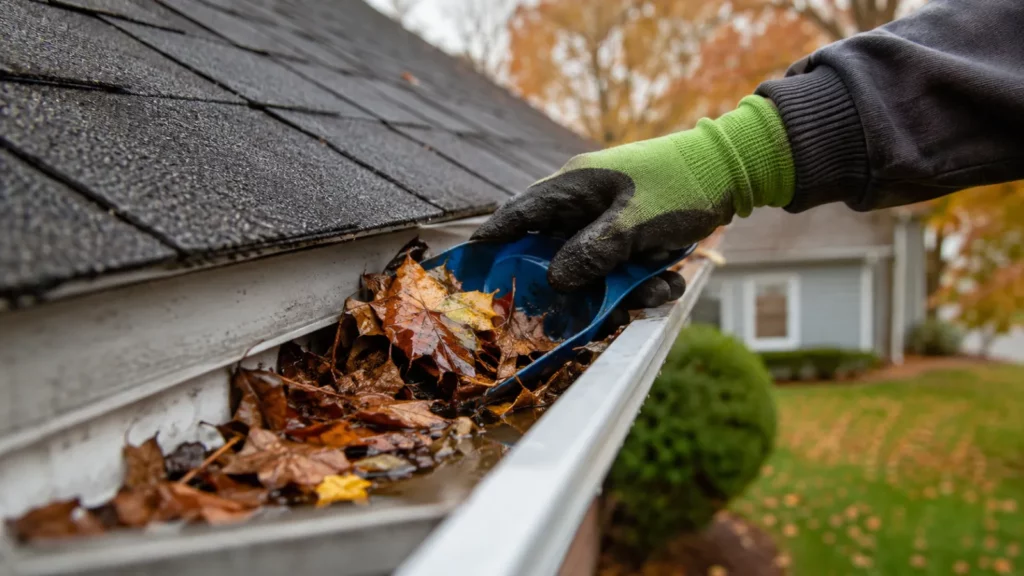
They keep the trough from packing solid with leaves, which is what causes the worst overflows and the ice-dam feeder in December. They cut the number of cleanings on most houses from two a year to one. They keep the big debris out of the downspouts. And on a house with a steep roof or a third story, they reduce how often someone has to be on a ladder at the eave. Those are real benefits, and on an open lot in Wappingers Falls or a newer development in LaGrangeville with young trees, guards may be all the maintenance the gutters need for years.
What They Do Not Do
They do not stop debris from landing on the roof and sliding onto the guards, where it sits until it is cleared. They do not stop the small material: seeds, needles, tassels, grit and pollen go through or over every type. They do not prevent ice dams, and some hold ice at the eave. They do not handle a Hudson Valley downpour on a steep roof; the water overshoots and lands at the foundation, which is the exact problem the gutters exist to prevent. And they hide what is happening in the trough, so a gutter that is full underneath looks fine from the ground until it overflows in a storm.
Guards And Ice Dams
The winter argument for guards is that clean gutters mean no ice dams. Half right. A packed gutter feeds an ice dam, but the dam itself comes from attic heat melting snow that refreezes at the cold eave, and guards do nothing about the attic. Reverse-curve guards and any guard that holds snow at the roof edge give the ice a shelf to build on. Our ice dam explainer covers where they come from and what actually reduces them; clean gutters are part of it, guards are not.

The Cleaning A Guarded Gutter Still Needs
Once a year at least, in late fall after the oaks have dropped, the guard surface has to be cleared, the downspouts flushed, and the roof valleys and the sections under trees checked underneath. A guarded gutter that overflows at the corners in a heavy rain is packed under the guard, and the guards have to come off to clear it. Our gutter cleaning handles guarded and unguarded gutters, and our post on when to clean gutters in the Hudson Valley explains why the fall visit is later than most people think.
The Math: Guards Versus Twice-A-Year Cleaning
Guards on a typical colonial cost what several years of twice-a-year cleaning does, and under trees they still need the yearly cleaning on top. For a house on a wooded lot in Fishkill, Millbrook or Hyde Park, the cheaper path over a decade is usually the cleaning, and it comes with something the guards do not: someone on a ladder at the eave twice a year who notices the loose downspout, the lifted shingle edge and the first moss on the north slope. For a house on an open lot, guards plus one cleaning a year is a reasonable choice. Either way, the gutters get looked at every fall.
Our Recommendation By Lot
Open lot, few trees: guards are fine, and one cleaning a year keeps the downspouts moving. Oaks and maples: skip the guards or accept that they cut the work rather than end it, and keep the fall cleaning after the leaves are down. Pines: micro-mesh is the only type that stands a chance, and the surface still has to be cleared. Any lot: if the gutters overflow at the corners, water stains the siding under the eave, or the roof edge is growing moss, the gutters need attention now regardless of what is on them.
Get The Gutters On A Schedule
Whether the house has guards or not, the fall cleaning is the one that matters. Send us your address and we will put the gutters on the calendar after the leaves are down, quote it in writing, and pair it with the roof or house wash at a package rate if they are due. Request a quote or call (845) 709-9443.
Gutter Guards FAQ
On an open lot with few trees, often yes: they keep the trough from packing and cut the cleanings. Under oaks, maples and pines, they reduce the cleaning but do not remove it. The guards collect debris on top, let the small material through, and still need the downspouts flushed. Nobody with a wooded lot in Dutchess County has stopped cleaning their gutters because of guards.
No. Ice dams form when heat escaping the attic melts snow that refreezes at the cold eave. Guards do not change the attic, and some styles hold snow and ice at the edge of the roof and make the dam worse. Clean gutters, attic insulation and ventilation are what reduce ice dams.
Pine needles, maple seeds, oak tassels in spring, shingle grit and pollen, depending on the type. Screens pass the small material; reverse-curve guards overshoot in heavy rain and let needles ride the water in; micro-mesh stops the most but clogs on top and still needs the surface cleared.
Usually once a year instead of twice, in late fall after the leaves are down, with a check of the downspouts and the guard surface. A gutter with guards that overflows in a rainstorm is full underneath, and the guards have to come off to clear it.
Yes. We clear the guard surface, flush the trough and the downspouts, and if a section is packed underneath we tell you before the guards come off. The price is quoted in writing before we start, like every job.
If the house is under trees, twice-a-year cleaning costs less over several years than guards plus the yearly cleaning they still need, and it keeps the downspouts and the roof edge in front of someone who will notice a problem. If the lot is open, guards make sense. Either way the gutters get looked at every fall.


