

A ridge of ice along the roof edge and a row of icicles off the gutter look like a roof problem. They almost never are. An ice dam starts in the attic: heat escaping through the ceiling melts the snow on the upper roof, and the water refreezes when it reaches the cold roof edge. Gutters that went into winter packed with leaves make it worse, because the meltwater has nowhere to drain. The attic is a job for an insulation contractor. The gutters are a November appointment that most homeowners skip.
What An Ice Dam Actually Is
Snow on the roof melts from underneath, warmed by heat escaping through the ceiling and attic, or from above on a sunny afternoon. The water runs down the slope until it reaches the eave, the last two feet of roof that hang out past the heated walls. That strip stays below freezing, so the water refreezes there. Every melt adds a layer, the layer becomes a ridge, and the next round of meltwater pools behind it with no way over the top. Shingles are built to shed water running downhill. They are not built to hold a puddle. The pooled water works up under the shingle laps, through the sheathing, and shows up in February as a stain on the ceiling of a house with a perfectly good roof.
Why Full Gutters Make It Worse
A gutter that goes into winter packed with wet oak leaves is the first thing on the house to freeze solid. That block of ice sits right at the roof edge where dams build, and it makes the problem bigger. Meltwater that should have run down the downspout hits the ice instead, spreads along the eave, and refreezes. The full gutter also holds water against the fascia board all winter, and a trough frozen solid weighs several times what its hangers were sized for, which is how gutters end up pulled loose by March.
The timing is the Hudson Valley catch. The maples are bare by mid October, but the oaks that shade most lots in Hyde Park, Rhinebeck and Millbrook, and the wooded developments around Hopewell Junction and Fishkill, hold their leaves into the second half of November. A gutter cleaned on Columbus Day is full again by the first snow, and that second load is the one that freezes. Our post on when to clean gutters in the Hudson Valley covers the calendar in detail; the short version is November, after the oaks are down.
The Damage, Inside And Out
Inside: water stains and peeling paint on the ceiling below the eave, wet insulation that loses most of its value and stays damp long enough to grow mold, and in a bad year water inside the wall cavity. Outside: fascia and soffit boards that rot behind the ice, exterior paint that peels along the eave, shingles lifted at the edge, gutters bent or torn off, and a line of icicles over the front walk that is a hazard to anyone who uses the door. The repairs run into the thousands. Sealing the attic and clearing the gutters before winter costs far less.
What Not To Do
Do not chip at the ice with a hammer, an axe or a shovel. Every strike takes shingle granules with it, and the gutter underneath is aluminum. Do not throw rock salt on the roof or into the gutters; it corrodes the gutters and flashing, stains the shingles, and kills whatever is planted under the downspout. Do not pressure wash or hot-water blast the roof edge, for the same reason we never pressure wash a roof at any time of year: it strips the shingles and voids the manufacturer warranty. And do not climb onto a snow-covered roof. The one safe move from the ground is a roof rake, used to pull the bottom three or four feet of snow off the eave after a storm so there is less to melt. If water is already coming through the ceiling, a licensed steaming contractor can remove the dam that day; that is an emergency service, and it does nothing to stop the next one.
The Fix Is Two Appointments, Not One Emergency
The first is the attic. Air leaks around light fixtures, the attic hatch, plumbing stacks and top plates let warm air into the attic, and that is what melts the snow from below. Sealing those leaks, adding insulation and making sure the soffit and ridge vents actually move air keeps the roof deck cold, so the snow stays snow until it melts evenly. That is an insulation or home-energy contractor, and it pays for itself in heating bills before it pays for itself in ice.
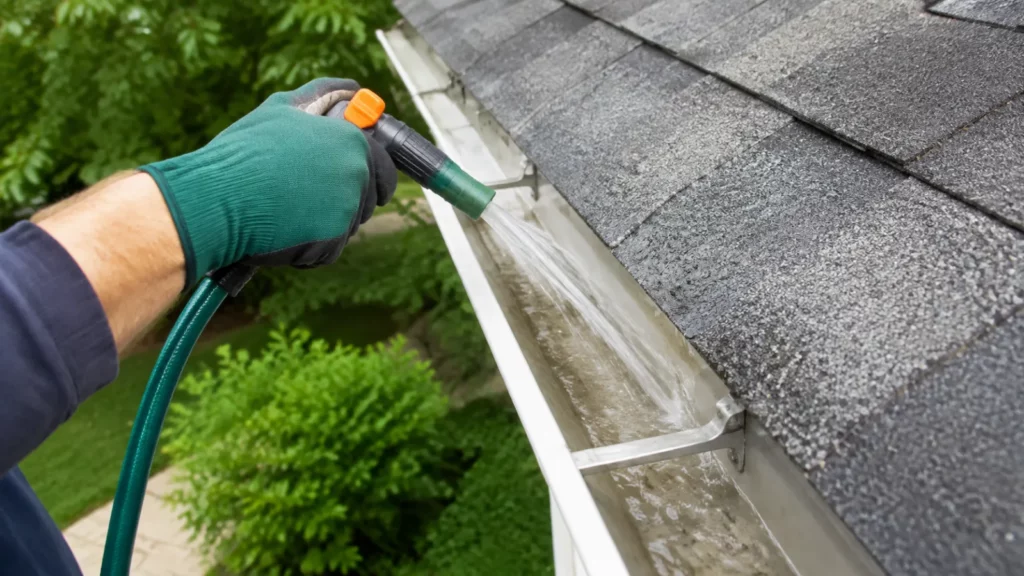
The second is the roof edge, and that one is ours. Gutters and downspouts cleared end to end in November, after the oaks drop, with every downspout confirmed to be draining, so meltwater has somewhere to go on the first warm day in January. A second visit in late spring keeps the summer storms moving. And a roof carrying moss and algae streaks holds snow and water at the eave longer than a clean one, so a roof soft wash in the fall sends the house into winter with a surface that sheds. The maintenance plan on our packages and plans page puts the spring and fall gutter visits on the calendar at a package rate, which is the whole point: the November visit stops depending on someone remembering it.
If You Have An Ice Dam Right Now
Keep the melt moving and keep people out from under it. Rake the lower roof from the ground after each snowfall, leave the icicles alone (pulling them takes the gutter with them), and watch the ceilings along the outside walls. If a stain appears or spreads, call a steaming contractor before it reaches the drywall. At the first thaw, we clear the gutters and downspouts so the next melt drains instead of refreezing, and we put next November on the calendar so this is the last winter you deal with it.

Put Next November On The Calendar Now
The right window for the fall gutter visit is short and it fills. Send us your address and a photo of the front of the house and you will have a firm number, usually the same day, with the visit scheduled for after the oaks come down. Request a quote or call (845) 709-9443.
Ice Dam FAQ
Not on their own. Ice dams start with heat escaping into the attic, which melts roof snow that refreezes at the cold edge. Clean gutters give that meltwater somewhere to drain and keep a frozen gutter from making the dam bigger, but the lasting fix is both: the attic sealed and insulated, and the gutters cleared in November.
Usually. Icicles form when meltwater reaches the roof edge and refreezes, which is the same process that builds a dam. A few small icicles after a sunny day are normal. Thick icicles along the whole eave, or a lip of ice on the gutter, mean water is refreezing at the edge and backing up.
No. Ice dams form on new roofs and old ones alike, because the cause is the melt-and-refreeze cycle, not the shingles. If water came in, the sheathing and insulation under that spot should be checked once it thaws, but the roof itself is rarely the problem.
Guards do not cause them, but a guard that ices over at the eave holds the ice in place and gives meltwater nowhere to go. Guarded gutters still need the tops of the guards and the trough cleared in November, and the downspouts confirmed draining.
From the ground, with a roof rake, for the first three or four feet above the eave, after a heavy snowfall. That keeps the melt off the cold edge. Never climb onto a snow-covered or icy roof, and never chip at the ice with a hammer or shovel.
In November, after the oaks have finished dropping, and before the first stretch of hard freezes. In the Hudson Valley that is usually the middle two weeks of the month. A second visit in late spring keeps the summer storms draining.


