You run a hand along the siding on the sunny side of the house and it comes away white. The color is flatter than it was, the south wall looks lighter than the north wall, and a house wash did not bring the color back. That is oxidation, and it is the one thing on a vinyl house that a wash cannot undo. What it can do, what it cannot, and how to tell the difference before you spend money on the wrong fix, is the point of this post. Most of the vinyl homes in Wappingers Falls, Fishkill and Hopewell Junction went up in the eighties and nineties, and the siding on them is now old enough for this to be the question.
What Oxidation Actually Is
Vinyl siding is PVC with pigment and stabilizers mixed in. Ultraviolet light breaks the surface down slowly, a few microns at a time, and what is left on the outside is a powder of degraded resin and pigment. That powder is the chalk. It starts on the walls that get the most sun, south and west, and on the darker colors, which absorb more heat, and it shows up on most siding somewhere between ten and twenty years in. Under the chalk the panel is still sound; oxidation is a surface problem, and it does not mean the siding is failing. It means the color is.
The Wipe Test: Oxidation, Algae Or Dirt
Three things make vinyl look bad, and they need three different answers. Take a damp white cloth to a shaded wall and a dry hand to a sunny one. Green on the cloth is algae, and it is alive; our post on the green north wall covers it. Gray or brown on the cloth is dirt, pollen and road film, and it washes off. A white powder that comes off dry, without water, on the sunny side is oxidation. Most houses in Dutchess County have all three at once, on different walls, which is why the north side looks green and the south side looks chalky on the same day.
What A House Wash Removes
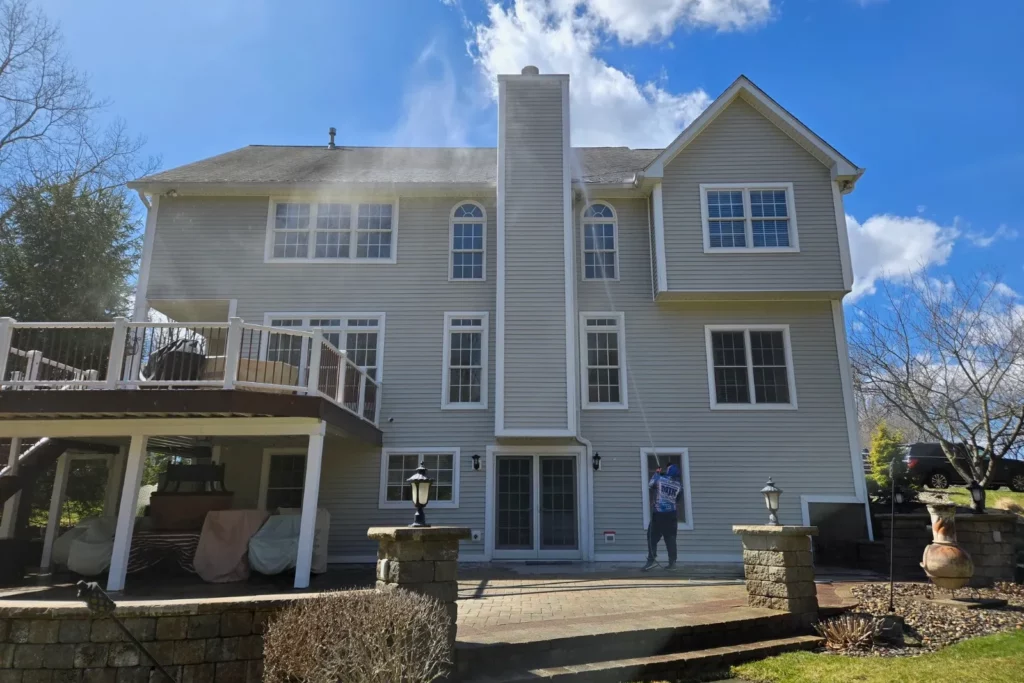
Everything sitting on top of the vinyl. A house soft wash kills the algae and mildew at the root, lifts the pollen, spider webs, road film and gutter streaks, and rinses the whole house at low pressure so every wall is cleaned the same way. On siding that is lightly chalked, that is most of the fix: the color looks a shade deeper once the film is off it, the walls match again, and the house reads as clean from the street. Every wash is quoted at a firm price in writing, and a house wash starts at $495 in Dutchess County.
What It Does Not Remove
The chalk is not on the siding; it is the siding. A house wash is not designed to strip the oxidized layer, and the pigment underneath it that the sun has already destroyed is gone whatever you do. Heavily oxidized siding comes out of a wash clean, even and muted, and we would rather tell you that on the driveway than have you expect the color to come back. We walk the house and do the wipe test before we quote, and you hear which of the three outcomes below applies before we start.
Why The “Oxidation Removal” You Read About Goes Wrong
The internet answer is a strong cleaner and a brush, or a pressure washer, and it produces the worst-looking vinyl in the county. Scrubbing removes the chalk wherever the brush touched and leaves it wherever it did not, so the wall comes out striped, with clean bands where the passes overlapped and a tide line at the top of every reach. Pressure does the same thing faster and adds wand marks and water behind the panels. Those stripes are permanent; you have removed the surface unevenly and there is no putting it back. The one way to clean chalked siding without streaking it is to clean every panel the same way at the same time, which is what a soft wash does and a brush cannot.
The Three Honest Outcomes
Light chalk, the kind that shows on your hand but not from the street: a house wash restores most of the look, and the siding is good for years on a regular schedule. Moderate chalk, where the south wall is visibly lighter than the north: the wash leaves the house clean and even, the color stays muted, and the house looks well kept rather than new. Heavy chalk, where the color is nearly gone and the panels are streaky already: the wash takes care of the growth and the grime, and the color decision is paint or replacement. We tell you which one you have before the truck is unloaded.
Painting Chalked Vinyl
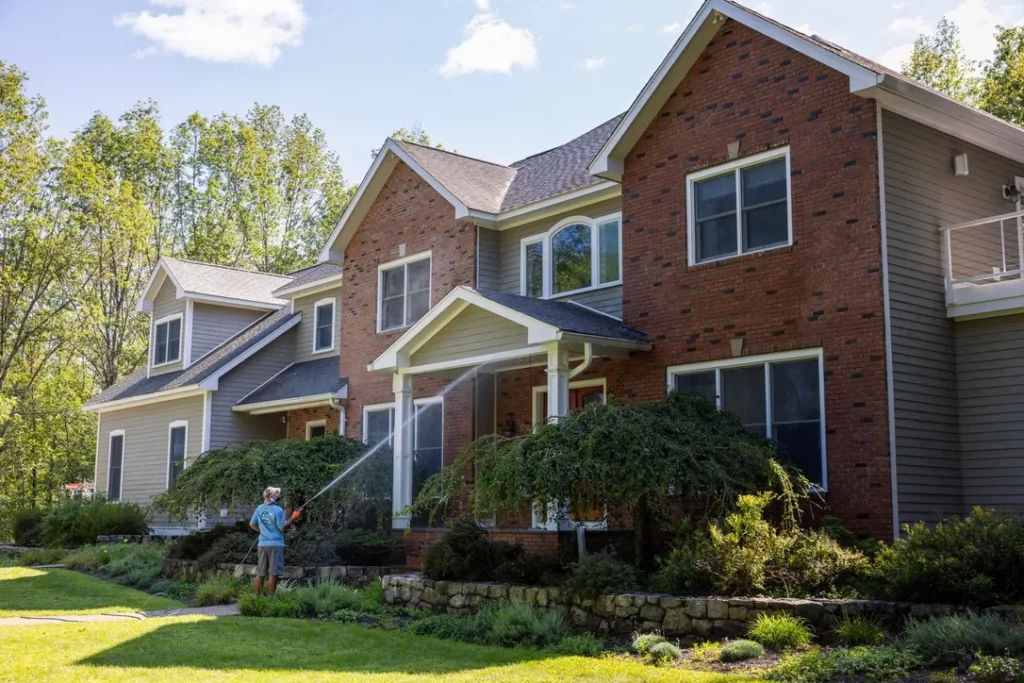
Oxidized vinyl can be painted, and on a sound house it is a fraction of the cost of new siding. The paint has to be formulated for vinyl and the color no darker than the original, because a darker panel absorbs more heat and can warp. And it has to go on clean siding: paint over chalk and mildew bonds to the chalk and mildew, not the vinyl, and peels within a couple of seasons. The wash before the paint is ours, the paint is your painter’s, and most painters in the Hudson Valley will not quote chalked siding until it has been washed.
Slowing It Down
Nothing stops ultraviolet light. What a regular wash does is keep the growth and grime off so the house is never chalked and dirty at once, keep the color even as it fades so the walls match, and keep water out of the caulk and the laps so the wall behind the siding stays dry. On a two-to-three-year schedule a vinyl house in Rhinebeck or Millbrook ages evenly instead of one wall at a time, and the decision to paint or replace arrives years later than it would otherwise.
Get A Straight Answer On The Siding
Send us your address and a photo of the sunny side of the house and you will have a firm number and a plain answer on which outcome to expect, usually the same day. Request a quote or call (845) 709-9443.
Oxidized Vinyl Siding FAQ
Because the surface of the vinyl has oxidized. Years of ultraviolet light break down the outer layer of the panel and its pigment into a fine powder, and that powder is what comes off on your hand. It is most common on south- and west-facing walls, on darker colors, and on siding fifteen years old or more.
It removes the algae, mildew, pollen and grime sitting on top of it, and on lightly chalked siding that restores most of the look. It does not restore the pigment the sun has already destroyed. Heavily oxidized siding comes out clean and even after a wash but muted, and we tell you which outcome to expect before we start.
You can, and it usually looks worse. Scrubbing or pressure washing chalked vinyl removes the chalk unevenly and leaves streaks and clean stripes wherever the brush or the wand overlapped, and they do not come out. A soft wash cleans the whole wall the same way, which is why it stays even.
Yes, with a paint made for vinyl in a color no darker than the original, after a full wash so the paint has a clean surface to bond to. Painting is a painter’s job; the wash before it is ours, and most painters will not touch chalked siding until it has been cleaned.
Wipe a shaded spot with a damp white cloth. Green on the cloth is algae. Gray or brown is dirt and road film. A white powder that comes off dry, without a wet cloth, on the sunny side of the house is oxidation. Most houses have all three, on different walls.
Nothing stops ultraviolet light, but regular washing keeps the growth and grime off so the siding does not look chalked and dirty at once, and it keeps the color even while it fades. A house wash starts at $495 in Dutchess County; our house washing cost guide lists the starting prices by home type.


